Establish source and operating context.
Register the asset, source, owner, technical properties, version and processing state before downstream work begins.
Connect intake, metadata, people, review decisions, rights context, channels and time-sensitive delivery without losing operational responsibility.
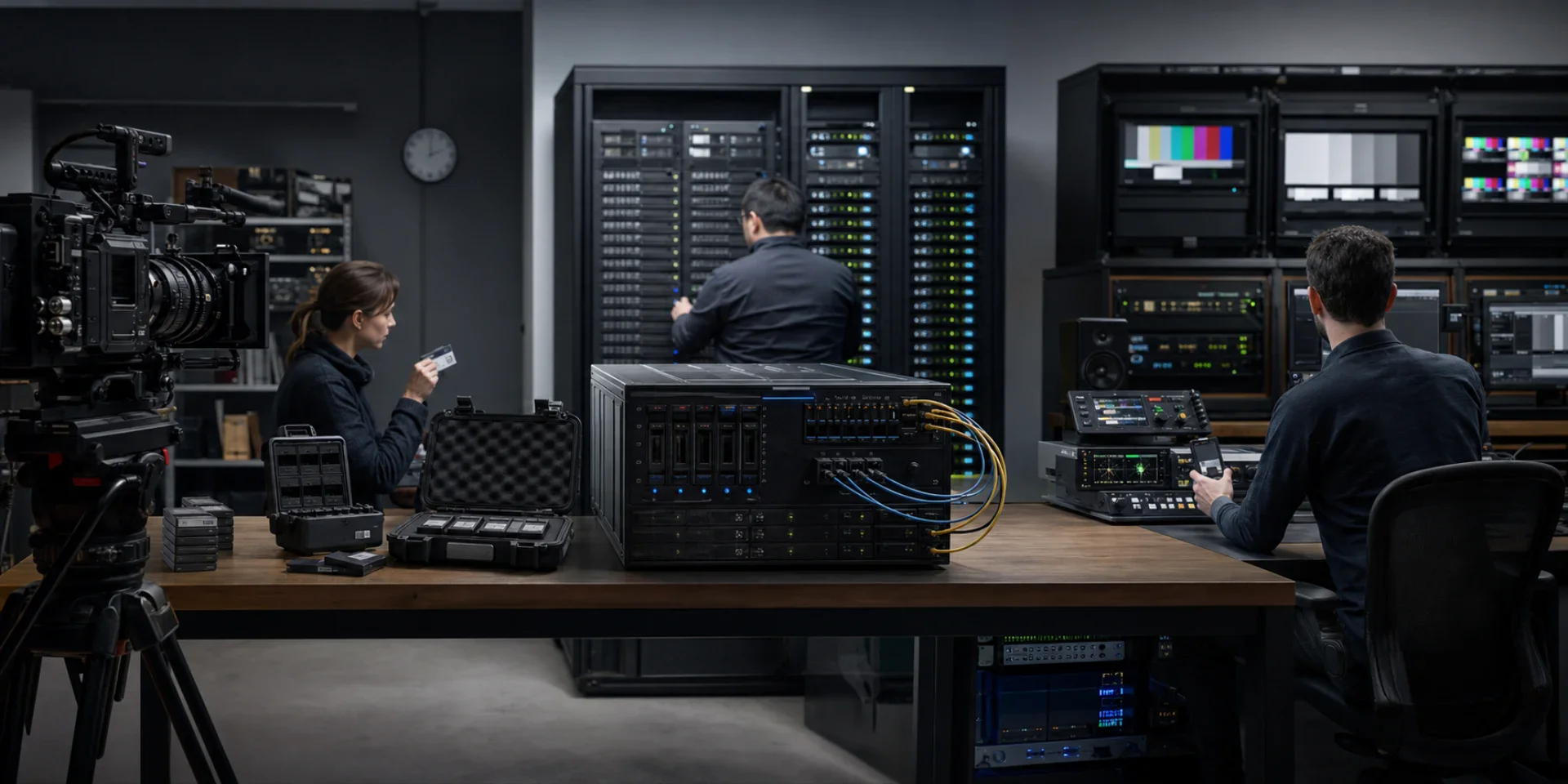
A media asset acquires meaning through source context, metadata, versions, contributors, review state, rights information, intended use and delivery channel. When those responsibilities live in disconnected tools, teams lose time and confidence at the handoffs.
The solution creates a connected operating record from intake through governed distribution, while allowing specialist systems to remain responsible for their domains.
Register the asset, source, owner, technical properties, version and processing state before downstream work begins.
Separate extracted, supplied and reviewed metadata; retain provenance and validation responsibility.
Route work by role, use case, rights context and exception, with clear approval and rework states.
Package and deliver the correct asset and context to permitted channels, then observe status and exceptions.
Every transition preserves the relationship among the asset, its metadata, the decision and the destination.
Asset storage, metadata, search, review workflow, background processing and distribution integrations have different scale and failure characteristics. Explicit boundaries let teams change one without obscuring the responsibility of another.
Rights, confidentiality and publication decisions remain accountable human and organizational responsibilities supported by workflow—not inferred from imagery or metadata alone.
Prevent review, derivative generation and distribution from silently moving to an unapproved asset revision.
Relate approval, rejection and exception handling to a role, purpose, version and timestamped workflow state.
Distinguish queued, delivered, rejected and partial outcomes so teams can recover without guessing.
Media workflows combine large binary assets, searchable knowledge, creative decisions and external distribution contracts. CognoSys designs the asset plane, metadata plane and workflow plane separately, then connects them through durable identities and events so throughput can grow without weakening lineage or approval.
Queue transcode, thumbnail, transcript, analysis and packaging tasks with idempotent workers, bounded retries, version-aware outputs and visible partial failure.
Combine taxonomies, technical properties, relationships and approved enrichment. Preserve source and confidence so generated or extracted context can be reviewed before reuse.
Relate comments, annotations, decisions and rework to an exact version and purpose; notify the right role without turning email into the workflow record.
Generate channel-specific packages, credentials and metadata; track acknowledgements and rejection reasons; isolate retries so one destination does not block the release.
COGDAM can provide a product foundation for asset, metadata and workflow responsibilities where its scope fits the architecture. The content organization defines source rights, permitted use, legal review, publication authority, channel agreements, retention and the standards applied to supplied or generated metadata.
Bring an asset type, source, metadata model, reviewers, rights context, destinations, exceptions and surrounding systems. We will frame the workflow, platform and integration responsibilities.